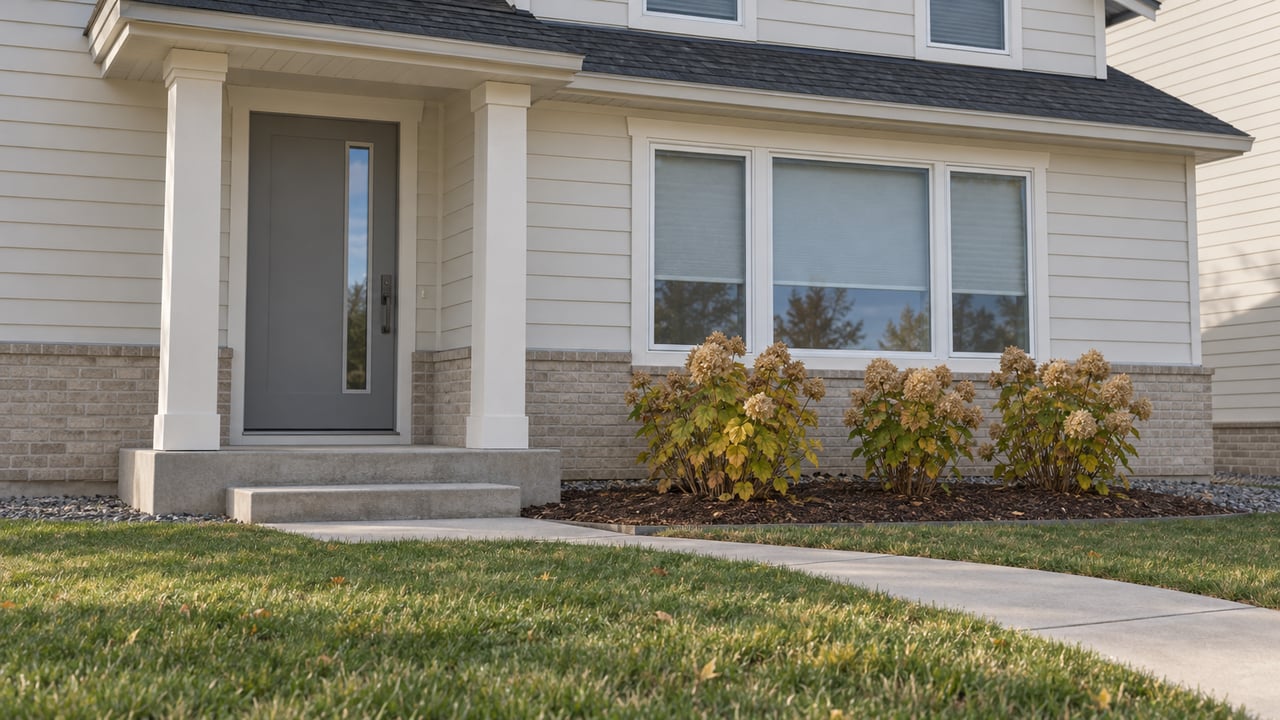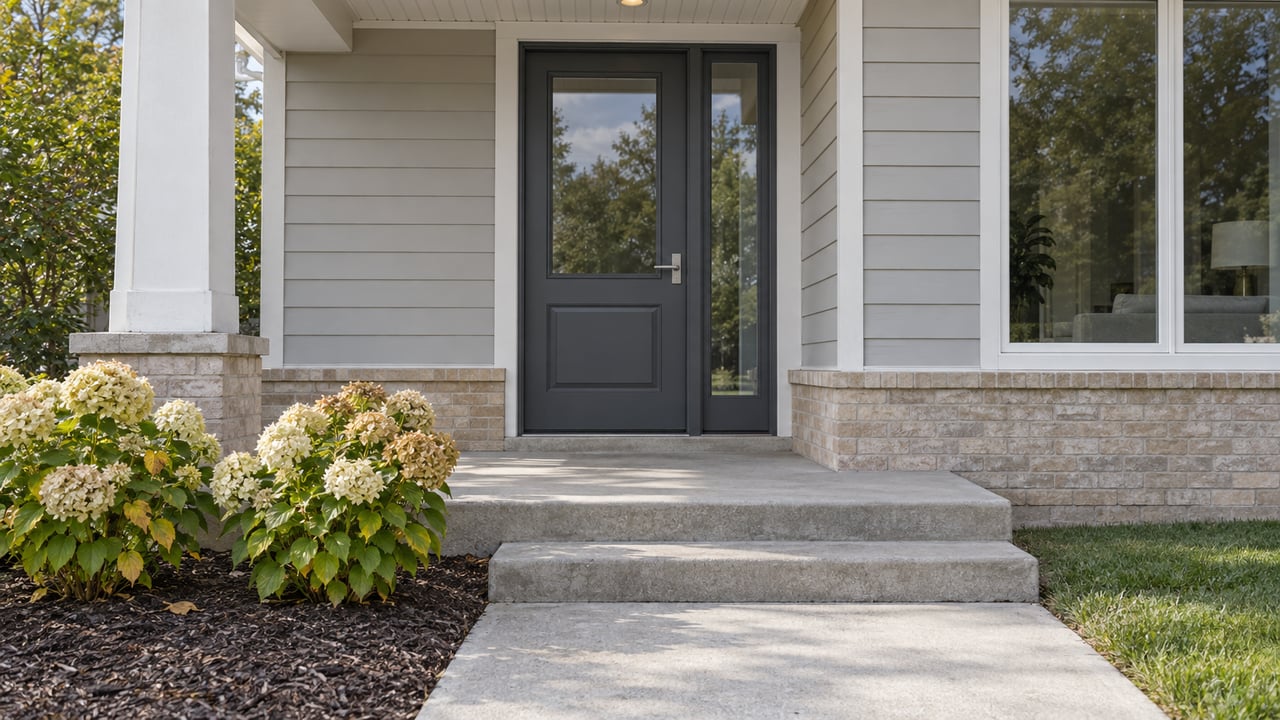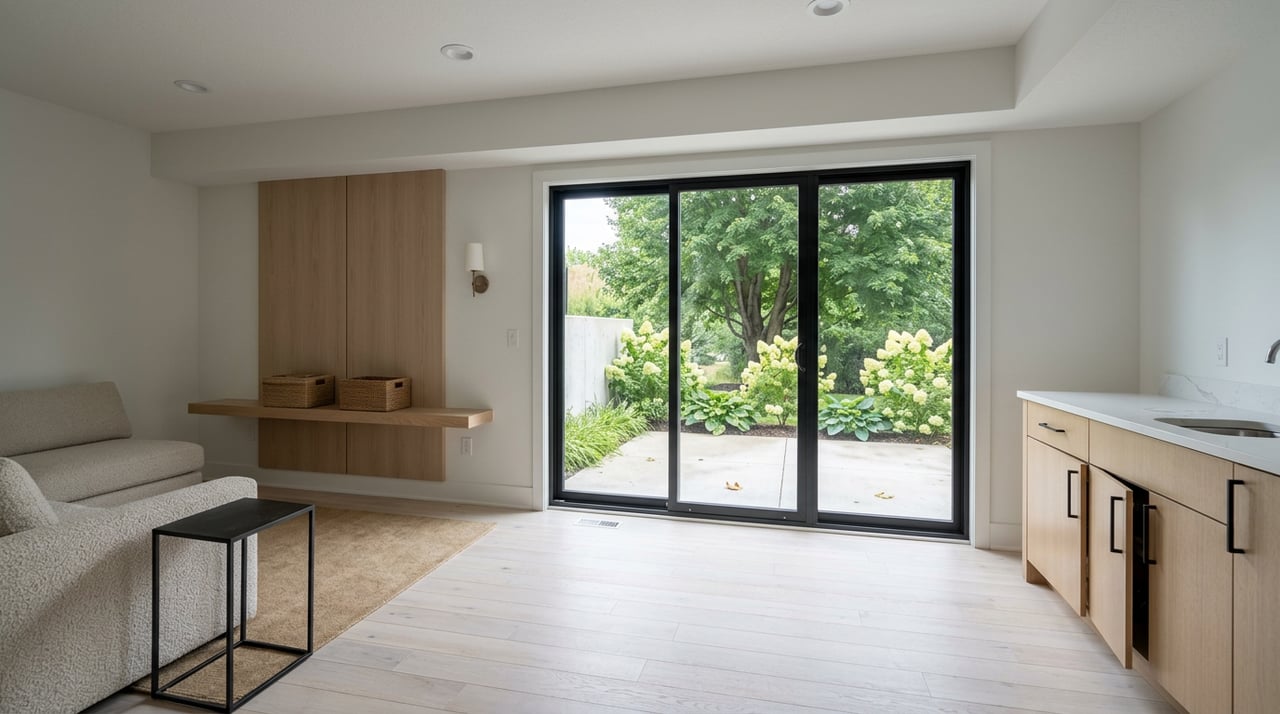
On a Saturday this fall, you could walk two open houses in Clive an hour apart and notice something different depending on which side of town you're standing on.
In the new-construction section off the far northwest edge, the builder's spec sheet now lists a passive radon vent as a standard feature, right alongside the furnace and water heater. Walk into a home in the Indian Hills area instead, or one of the well-kept builds along Hawthorn Drive or Country Club Boulevard, and you won't find that line item. Not because the home has a problem. Because the requirement that put it on the newer spec sheet didn't exist when the older home was framed.
That gap just became real. On July 1, 2026, Iowa's building code started requiring passive radon mitigation systems in every new single-family and two-family home built in the state, under House File 2297. Governor Kim Reynolds signed the bill on May 19 after it passed the House 87 to 4 and the Senate 46 to 0. State Rep. Hans Wilz, the bill's sponsor, said in Iowa Capital Dispatch's coverage: "This bill will attack the radon issue on the front end with new home construction."
The rule is not retroactive. It applies only to construction that commenced after the requirement took effect. If your Clive home was built last year, last decade, or last century, the law does not touch it. That's worth sitting with for a second, because it means the state just created two categories of home in the same city: one where mitigation is now baked into the code, and one where it never has been and still legally isn't required.
The detail most radon explainers miss about Clive
Here's the part that gets lost in the statewide framing. Clive is not entirely in one county. The city sits across the Polk and Dallas county line, and that line already mattered for radon before HF2297 existed.
Before this year, only 11 jurisdictions in Iowa required radon-resistant new construction on their own, ahead of the state. Polk County was one of them, alongside Johnson, Linn and Bremer counties and cities like Altoona, Bondurant, Norwalk and Iowa City, according to the state's own radon resources page. Dallas County was not on that list.
So a new-construction home built five years ago on the Polk County side of Clive may already have had passive mitigation designed in, because the county required it locally. A new home built the same year on the Dallas County side would not have, because nothing required it there until this July. Age alone was never a reliable stand-in for whether a Clive home had built-in radon protection. Which side of the county line it sat on mattered just as much.
What the law does not touch
None of this changes what Iowa asks of a seller. There is still no statewide requirement to test a home for radon before selling it, new or old. What the law requires, and has required since 1994 under Iowa Code Chapter 558A, is disclosure of what you already know. If you've had your Clive home tested and you have a result, you disclose the date and the number. If you haven't tested, you say so.
Sellers also have to confirm, on the Seller Property Condition Disclosure, that they gave the buyer a copy of the Iowa Radon Home-Buyers and Sellers Fact Sheet, prepared by the Iowa Department of Health and Human Services, and the buyer has to acknowledge receiving it. That paperwork exists whether or not any testing ever happened. It's a disclosure obligation, not a testing mandate, and the Iowa Real Estate Commission enforces it through Iowa Administrative Code 193E without ever requiring a test result to exist in the first place.
Why the gap becomes a seller's problem anyway
So if the law leaves established Clive homes alone on paper, why does it matter to someone listing a house on Rocklyn Place or Oakbrook Drive this year?
Because buyers don't shop street by street. They shop across a city, and increasingly across new construction and resale in the same afternoon. A buyer who just toured a northwest Clive build with mitigation already listed on the spec sheet is going to walk into an established home and ask about radon, whether or not the law obligates the seller to have an answer ready.
A Des Moines Realtor quoted in KCRG's coverage of the bill made the same point from the seller's side. Her advice was simple: get the home tested and be ready for the conversation, because it's more likely than not to come up during the inspection period regardless of what the law requires.
That's the actual mechanism at work here. The law didn't add a requirement to established homes. It changed what a buyer now treats as normal, and normal is doing the work that a disclosure form never forced anyone to do.
The fact that undercuts "my neighbor tested fine"
One line in the state's own fact sheet is worth repeating to anyone selling in Clive's established neighborhoods. Radon levels can vary considerably from house to house, even on the same street, even between two homes built the same year by the same builder. The Iowa Department of Health and Human Services puts it plainly: a high reading and a low reading can turn up in homes standing directly next to each other.
That means a clean test result on Wildwood Drive tells you nothing reliable about the house two doors down. The Iowa Department of Public Health's broader estimate, drawn from years of collected home test data, is that as many as five in seven Iowa homes carry elevated radon readings. Soil conditions under a slab, how a basement was finished, how tightly a house was sealed during a later remodel: all of it shifts the number independent of what the neighbor's paperwork says.
What testing actually looks like
If you're weighing whether to test before you list an established Clive home, here's what the process typically involves:
- A short-term test, usually run for 48 hours with a continuous monitor, costs roughly $100 to $250 when performed by a certified professional, according to the Iowa Cancer Consortium.
- The EPA's action threshold is 4.0 picocuries per liter. Readings between 2.0 and 4.0 are generally worth a second look rather than immediate action.
- Winter tends to produce the highest readings, since homes are sealed tighter against the cold and the resulting stack effect pulls more soil gas up through the foundation. The Iowa Poison Control Center actually recommends winter testing for that reason, since it gives the most conservative picture of how a home performs year round.
- If a test comes back elevated, installing a mitigation system typically runs $1,000 to $2,500, and it's common for buyers and sellers to settle on a closing credit or price adjustment rather than treat the number as a deal breaker.
- A result older than about two years generally isn't treated as current by buyers or their agents, so a test from a previous listing attempt may not carry much weight if enough time has passed.
If you're listing in Clive's established core this year
None of this changes your legal obligation. You still don't have to test. You still only have to disclose what you know. But the market around your listing has shifted in a way that rewards getting ahead of the question instead of waiting for it to come up.
A test run before you list costs less than most sellers expect, and it gives you a number to point to instead of a blank line on the disclosure form. If the result comes back clean, that's one fewer item a buyer's inspector raises during the contingency period. If it comes back elevated, you get to decide how to handle it on your own timeline instead of negotiating it under pressure with a closing date already on the calendar.
Either way, you walk into showing season having already answered the question that new construction down the road answered before the buyer even asked.
Frequently asked questions
Does Iowa require radon testing before I sell my home? No. There is no statewide requirement to test. Sellers must disclose known test results and provide the state's radon fact sheet, but the testing itself is never mandated.
Does HF2297 apply to additions or major remodels on an existing Clive home? No. The law applies only to new single-family and two-family residential construction that began after the requirement took effect on July 1, 2026. Additions, remodels, and existing structures fall outside it.
If my established Clive home already has a mitigation system installed, do I need to do anything differently? You'd disclose the system and any related test results the same way you'd disclose any known material fact about the property. Having one installed doesn't create an additional state requirement beyond that.
Is one part of Clive more likely to have elevated radon than another? The state's own data says levels vary house to house rather than by neighborhood or county line. The Polk and Dallas county boundary through Clive affected which new homes were required to have mitigation built in before this year. It doesn't predict which individual homes have elevated radon today.
If you're weighing when to list an established Clive home, or want to talk through how a fresh radon test might shape your pricing conversation this season, Lynn Harder can walk through what buyers in today's market are actually asking for, room by room and county line by county line. Your Home Journey Starts Here.
This article is general information, not legal, tax or financial advice. Consult a qualified professional about your situation.