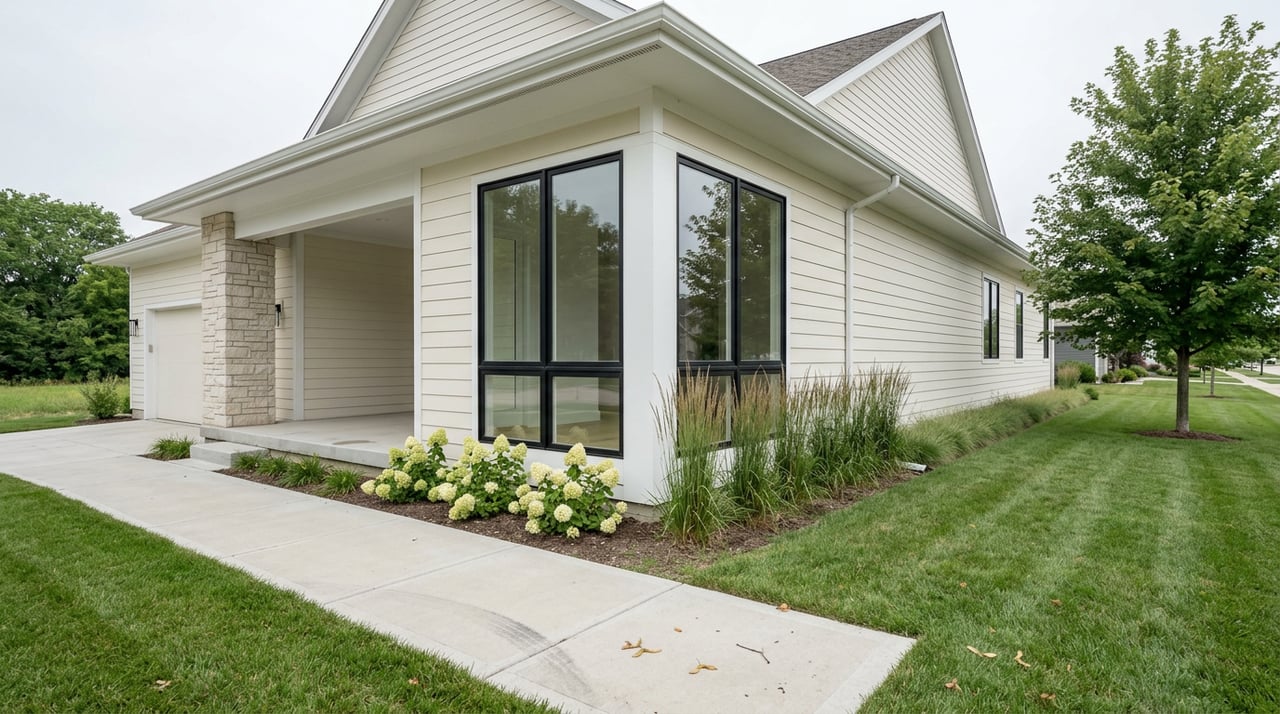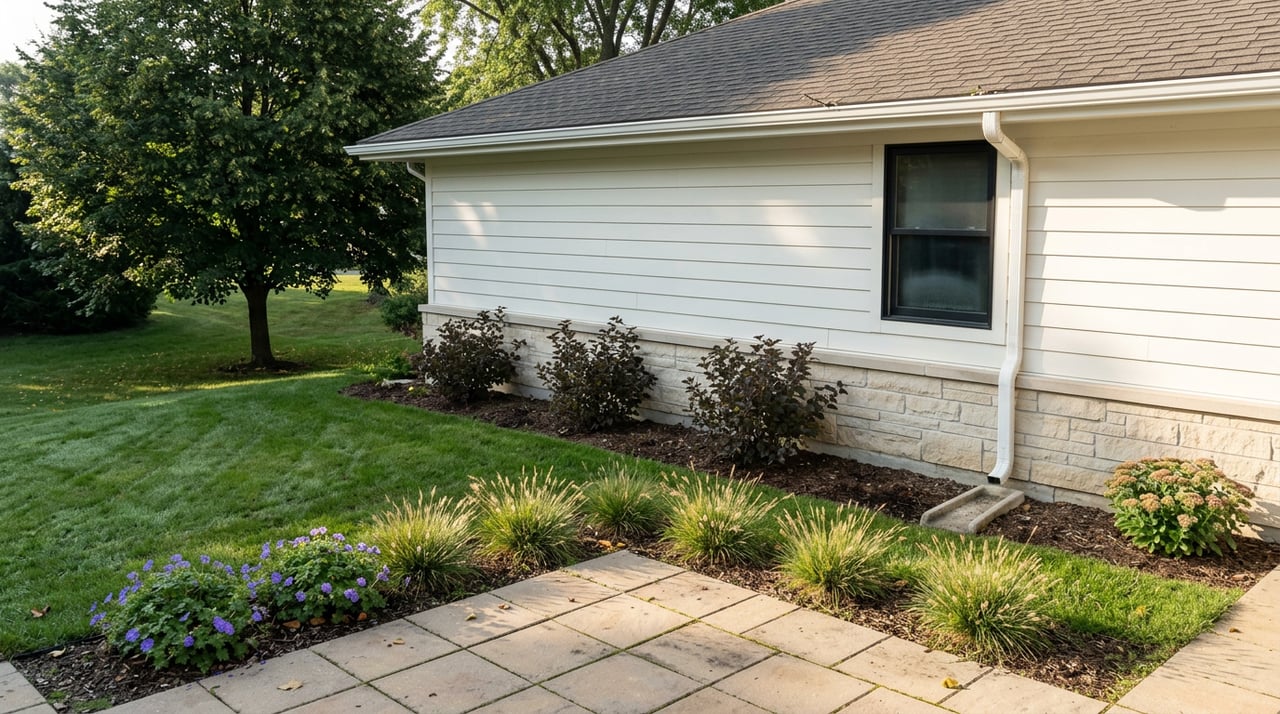
Two houses go on the market a block apart in Urbandale this fall. Both were built in 1982. Both sellers fill out the same one-page form, answer the same basement question, and sign the same certification that everything they wrote is true to the best of their knowledge. One closes in six weeks without a single follow-up call. The other ends up in mediation four months after closing over a problem the seller swears they never saw.
The difference wasn't honesty. Both sellers told the truth as they knew it. The difference was what the house itself had been doing underground for the past forty years, and whether anyone had looked closely enough to catch it before the buyer's inspector did.
That gap is about to matter more in Urbandale than it has in a while. The city's dominant housing stock, built mostly in the 1970s through the 1990s, is aging into the window when foundation waterproofing membranes were designed to fail, and Iowa's disclosure form just got one line longer. Selling here in 2026 means understanding a rule most sellers get backward: good faith protects you from a fraud claim. It does not protect you from a mediation bill.
What the form actually asks
Every Iowa home sale of four units or fewer runs through the same document, the Seller Property Condition Disclosure, and question one is blunt: basement and foundation, any known water or other problems, any known repairs. The seller certifies the answers are accurate to the best of their knowledge as of the date signed, and the form makes clear it is not a warranty and not a substitute for the buyer's own inspection.
Starting January 1, 2026, the form carries a new question about lead service lines, the pipe running from the water main into the home. A lead service line is any line made of pure lead, or any galvanized pipe that was ever downstream of a lead line. Homes built before the mid-1980s carry the highest risk. Urbandale's growth spanned exactly that period and beyond, which means a meaningful share of local sellers are answering a question on their disclosure form this year that didn't exist the last time they sold a house.
None of this requires a plumber or an engineer before you list. Sellers mark yes, no, or unknown, based on what they actually know. The trouble starts when what a seller knows and what's actually happening in the crawlspace turn out to be two different things.
The soil doing the work underneath
Urbandale sits on Dows Formation glacial till, a mix of clay, sand, gravel, and cobbles left behind by the last ice sheet. The upland soils here, classified as the Sharpsburg, Otley, and Ladoga series, carry roughly 35 to 42 percent clay in the subsoil. That's moderate swelling clay by USGS standards, less dramatic than the expansive clays that cause trouble in places like Kansas City, but Urbandale compensates with something else: a 42-inch frost line, about six inches deeper than Kansas City's. Deeper frost means more freeze-thaw cycling against every footing in town, every winter, for as long as the house has stood.
Foundation repair contractors working the area describe the pattern the same way: homes built between the 1970s and 1990s, now 30 to 50 years old, are entering the stretch where original waterproofing membranes reach the end of their design life and settlement that was invisible for decades starts showing up as stair-step cracking, sticking doors, and basements that were dry for thirty years and suddenly aren't. Contractors report seeing this concentrated along the 86th Street and Merle Hay Road corridor in particular, streets lined with exactly the vintage of housing stock now hitting that mark.
None of this means every older Urbandale home has a problem. It means the odds of an undiscovered one just went up, at the same moment the disclosure form got a new question to answer.
Good faith protects you from fraud, not from cost
Here's the part sellers consistently misunderstand. Iowa's disclosure law uses what amounts to a good faith standard: you disclose what you actually know, and if you didn't know something, you generally aren't liable for fraud. But good faith is a defense against a lawsuit, not a guarantee that nothing goes wrong.
A common scenario plays out like this: a seller who rarely used their basement fills out the form honestly, sees nothing unusual, checks no. After closing, the buyer finds water. Everyone goes back and forth, and it ends in mediation. It turns out the water was coming in through the siding, not the foundation, something the seller genuinely didn't know and had no reasonable way to catch without looking for it specifically. The seller hadn't lied. They still walked out of mediation having paid to resolve it.
Under Iowa Code chapter 558A, a buyer who discovers an undisclosed material defect can pursue repair costs or attorney fees, and the clock on that claim runs from when the buyer discovers the problem, not from the closing date. A material fact is one a reasonable buyer would consider significant enough to affect their decision to buy, or the terms they'd offer. Foundation and moisture problems sit squarely in that category. A repair completed ten years ago, even one that looks fully resolved today, still counts as relevant information a seller should include.
Good faith didn't fail that seller. It just never promised to cover the bill.
What buyers do once an inspector flags it
Foundation cracks aren't uniform, and the type matters more than the fact that a crack exists at all.
| Crack type | What it typically signals |
|---|---|
| Hairline settlement crack | Common, usually cosmetic |
| Vertical crack | Moderate concern, worth a second look |
| Stair-step crack | Soil or foundation movement |
| Horizontal crack | Serious structural concern |
| Crack with active water intrusion | Needs immediate evaluation |
| Bowing wall | High-risk, typically the most expensive fix |
Once an inspection turns up anything past the hairline category, the negotiation usually shifts fast. A buyer who walked in planning to spend a few thousand dollars on cosmetic updates can pivot to demanding a much larger credit if they believe structural stabilization is on the table. Typical asks include a price reduction, a repair credit, completion of the work by a licensed contractor before closing, or proof that any existing repair warranty transfers to the new owner.
This is exactly why a pre-listing structural opinion, not just a general home inspection, is worth the cost for anyone selling an Urbandale home from this era. A general inspector can flag a crack. Only a structural engineer can tell a seller whether it's cosmetic or something a buyer's lender will care about, before that conversation happens under deadline pressure during someone else's due diligence period.
Reading the market you're actually selling into
As of June 2026, Urbandale's median list price sat at $389,000, with homes spending a median of 61 days on the market, roughly flat compared to the same month the year before. That's a market with room to negotiate, not one where sellers can count on multiple offers erasing an inspection problem.
In that kind of market, a foundation issue that surfaces mid-transaction doesn't just cost money. It costs time, and time is the one thing a seller with a documented issue can least afford to lose, since a collapsed deal and a relisting can itself become something future buyers ask about.
A pre-listing checklist worth the hour it takes
- Pull any old repair invoices, permits, or warranty paperwork for foundation, drainage, or waterproofing work, even work done a decade ago
- If you've noticed a crack, sticking door, or basement dampness you've never had evaluated, get a structural engineer's opinion before you list, not after an offer arrives
- Answer the lead service line question honestly, understanding that unknown is an acceptable answer if you genuinely don't know your pipe material
- Document observed conditions specifically. "Hairline crack noted in 2021, no visible change since" holds up better than "minor crack" if anyone ever asks
- Remember that a repaired issue is still a known issue. Disclose it, and include what was done and when
Frequently asked questions
Does the new lead service line question apply to a home built in the 1990s? Homes built before the mid-1980s carry the highest known risk, but the question applies to every seller regardless of build year. Unknown is a valid answer if you don't have documentation of your line's material.
If I fixed a foundation crack years ago, do I still have to mention it? Yes. Iowa's good faith standard covers what you know, and a past repair is something you know. Leaving it off doesn't remove the history, it just removes the paperwork trail that would have protected you if a question comes up later.
Does a foundation issue mean the deal is dead? Not usually. Plenty of buyers move forward once they have a real structural opinion, a specific repair estimate, and a negotiated credit or price adjustment that reflects the actual cost rather than a guess.
Selling a home that's carried you through three decades of Iowa winters shouldn't come down to guessing what's happening below the slab. If you're weighing whether to get ahead of a repair before listing, or you just want a straight read on what your Urbandale home's age and location mean for this year's disclosure form, Lynn Harder will walk through it with you, plainly, before you're staring at an inspection report on someone else's timeline.